Location-Request Intake Agent

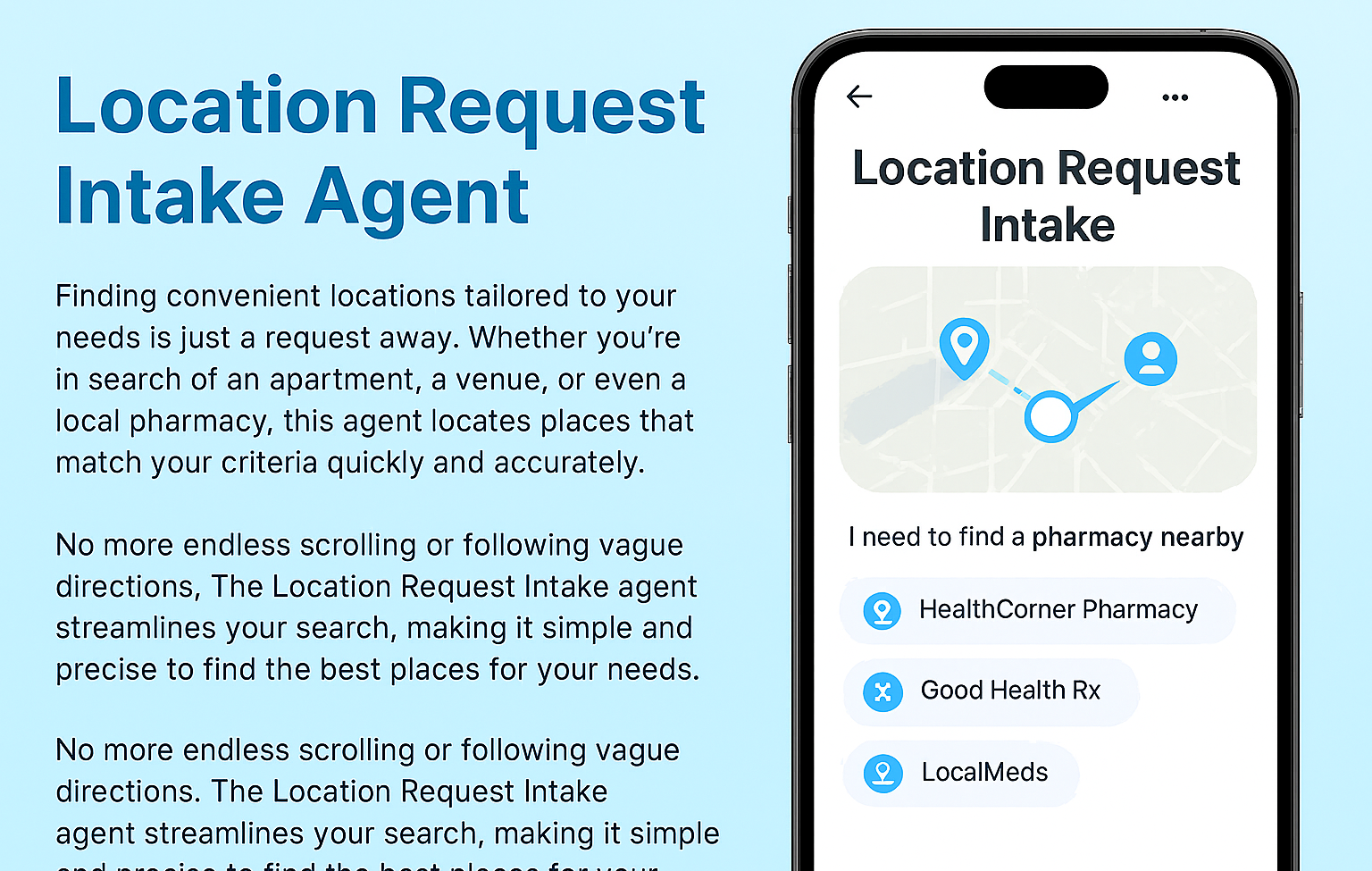
The Critical Role of Location-Request Intake in Lawful Data Access
In today’s digital world, location data has become a powerful tool for law enforcement and emergency services. Whether it’s finding a missing person, responding to a crisis, or investigating criminal activity, timely access to accurate location information can save lives and solve cases. However, with great power comes great responsibility—especially when it comes to privacy, legal compliance, and public trust.
What Is Location-Request Intake?
Location-request intake is the administrative and legal process by which agencies submit, review, and process requests for location data from telecommunications carriers or service providers. This process is not just a formality; it is a critical safeguard that ensures every request for sensitive location information is:
- Legally authorized (e.g., supported by a warrant, court order, or emergency declaration)
- Properly documented (with clear scope, time window, and identifiers)
- Compliant with privacy laws (such as ECPA, CALEA, and state statutes)
- Auditable and transparent (with a full record of who requested what, when, and why)
Why Is Proper Intake So Important?
Improper or sloppy intake processes can lead to serious consequences:
- Privacy violations that erode public trust and may result in legal liability
- Suppression of evidence in court due to procedural errors
- Delays in emergency response if requests are incomplete or non-compliant
- Regulatory penalties for failing to follow statutory requirements
A robust intake process protects both the public and the agencies involved, ensuring that location data is accessed only when truly necessary and always within the bounds of the law.
The Challenges of Location-Request Intake
Handling location data requests is complex. Agencies must:
- Verify the identity and authority of the requestor
- Validate legal documents for completeness and authenticity
- Ensure requests are narrowly tailored (minimal data, limited time window)
- Track approvals, denials, and escalations
- Maintain detailed audit logs for accountability
Manual processes are prone to error, slowdowns, and inconsistent application of rules—especially as the volume of requests grows.
How Technology Can Help: The LRIA Example
Enter the Location-Request Intake Agent (LRIA)—an AI-powered administrative assistant designed to automate and standardize the intake process. LRIA:
- Verifies requestor credentials against authorized directories
- Checks legal documents for required elements and potential pitfalls
- Enforces data minimization and compliance with all relevant laws
- Prepares administrative packets for human approval, never accessing data directly
- Maintains a secure, immutable audit trail of every action
By automating these steps, LRIA reduces the risk of error, speeds up response times, and ensures every request is handled with the highest standards of legality and privacy.
Conclusion
Location-request intake is more than paperwork—it’s the foundation of lawful, ethical, and effective use of location data in public safety. As technology and privacy expectations evolve, so must our processes. Solutions like LRIA show that it’s possible to balance the needs of law enforcement and emergency services with the rights of individuals, building a system that is both efficient and trustworthy.
Interested in learning more about secure, compliant location-request intake? Contact us to see how LRIA can help your agency.
Where urgency meets compliance.
SimpleLife
Every request, verified. Every step, accountable.