HOME PLAN & DESIGN

Home Plan and Design: The 2025 Guide to Building a Home That Lives Well
Overview Designing a home is more than drawing walls—it’s aligning your lifestyle, budget, and site with spaces that feel effortless, efficient, and beautiful. This guide breaks down the full journey from concept to construction: site analysis, space planning, style selection, materials, interiors, exteriors, sustainability, costing, and approvals—plus checklists, sample layouts, and FAQs to help you move forward with confidence.
What “Home Plan & Design” Really Means
- Strategy: Matching your daily routines, family size, and future plans with a functional layout.
- Performance: Optimizing daylight, ventilation, acoustics, and energy use.
- Style: Choosing an architectural language and interior palette that ages well.
- Buildability: Producing code-compliant drawings, quantities, and realistic cost estimates.
- Continuity: Ensuring exterior, interior, and landscape design read as one coherent vision.
Step-by-Step: From Raw Land to Move-In
- Site Analysis
- Understand orientation (true north), sun path, prevailing winds, and views.
- Map legal setbacks, easements, and access points.
- Identify slope, drainage, soil type, and existing trees to preserve.
- Outcome: Recommended building footprint and massing for light, privacy, and ventilation.
- Space Programming
- Define the room list and target areas (e.g., living 22–30 m², kitchen 10–16 m², bedrooms 12–18 m²).
- Clarify relationships (kitchen ↔ dining, mudroom ↔ garage, laundry near bedrooms).
- Plan circulation: 1.2 m+ hallways, clear entry sequence, intuitive zoning (public, private, service).
- Concept Layouts
- Develop 2–3 floor plan options with furniture layouts to test flow.
- Validate ergonomics: minimum bedroom width 3.0 m; bathroom 1.6 m x 2.0 m+; doors 900 mm clear; stairs 1000 mm+.
- Optimize glazing on north/east (or climate-appropriate) sides for balanced daylight.
- Schematic to Detailed Design
- Lock the preferred option and refine wall thicknesses, door swings, window sizes, and storage.
- Add dimensions, grids, sections, and elevations.
- Coordinate structure, MEP routes, and fixture locations.
- Documentation & Approvals
- Produce permit-ready sets: site plan, dimensioned floor plans, elevations, sections, schedules.
- Generate Bill of Quantities (BOQ) and preliminary cost estimate.
- Prepare energy and compliance documentation as required by your jurisdiction.
Space Planning Fundamentals That Always Work
- Zoning: Place public spaces (living/dining/kitchen) toward light and views; keep bedrooms quieter.
- The triangle: Kitchen sink, cooktop, and fridge should form an efficient triangle with clear prep zones.
- Storage: 10–15% of total area for storage (pantry, linen, mudroom, closets).
- Flexibility: Include a room that can shift between guest, office, or nursery.
- Vertical logic: If two stories, stack wet rooms to simplify plumbing.
Choosing Your Architectural Style
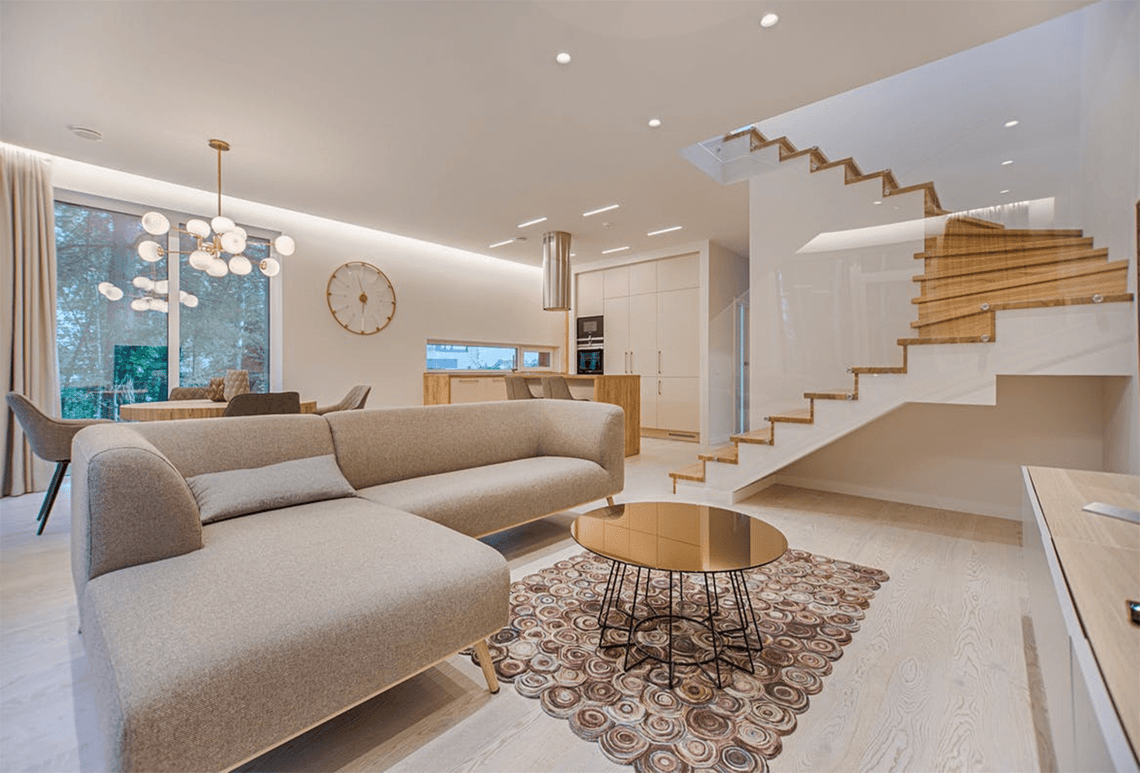
- Modern: Clean lines, large windows, open plan, minimal ornamentation.
- Contemporary: Warm modern with tactile materials, sustainable features, and indoor-outdoor continuity.
- Modern Farmhouse: Gabled roofs, board-and-batten or lap siding, black-framed windows, welcoming porches.
- Mediterranean/Coastal: Stucco, clay/metal roofs, shaded loggias, arched openings where appropriate.
- Biophilic/Green: Natural materials, abundant daylight, plant integration, low-VOC finishes, energy-smart envelope.
Budgeting, BOQ, and Cost Control
- Align area with budget: Total floor area largely determines cost. Keep a running cost-per-m²/ft² model.
- Prioritize: Spend on envelope (insulation, windows), kitchens/baths, and durable flooring.
- Standardize: Fewer window sizes, repeat structural bays, and simple rooflines reduce cost.
- BOQ basics: Wall lengths and heights, floor finishes, roofing area, door/window schedules, fixtures.
- Contingency: Add 10–15% for unknowns, more for renovations or complex sites.
Climate-Smart, Sustainable Design
- Orientation: Place main glazing to capture soft daylight; shade west-facing glass to reduce heat gain.
- Envelope: High R-values, air sealing, quality windows/doors, thermal breaks.
- Passive strategies: Cross ventilation, stack effect, overhangs, light shelves.
- Systems: Heat pump HVAC, solar PV readiness, smart controls, efficient water heating.
- Materials: Low-VOC paints, FSC-certified wood, recycled content tile/stone, durable roofing.
Interior Design: Room-by-Room Essentials
- Living: Anchor with a focal wall or fireplace; allow 900–1000 mm clear walkways around seating.
- Kitchen: 1000–1200 mm aisles; 600–900 mm landing zones beside cooktop and oven; pantry near entry.
- Dining: Size table for daily use plus leaves; include buffet or built-in for storage.
- Bedrooms: Plan bed wall with outlets and sconces; 1800–2000 mm closet hanging width per adult.
- Bathrooms: 760 mm clear in front of fixtures; 1200 mm preferred for comfortable movement; good ventilation is non-negotiable.
- Lighting: Layer ambient, task, and accent; use 2700–3000K for warm residential comfort.
- Palette: Choose a coherent 3–5 color family that travels through the home; vary textures to add depth.
Exterior and Curb Appeal
- Form: Rooflines that match climate (low-slope with robust waterproofing vs. pitched for snow/rain).
- Openings: Window rhythm aligned with interior layout; consider higher sills for privacy in bedrooms.
- Materials: Pair a durable base (stone/brick) with lighter cladding above; limit to 2–3 exterior materials.
- Details: Eaves, trim, railings, and entry doors set the tone—keep proportions consistent.
- Landscape: Plant for shade and privacy; integrate paths, lighting, and drainage from day one.
Common Mistakes (and How to Avoid Them)
- Overbuilding area vs. budget: Right-size rooms; invest in quality over quantity.
- Poor storage: Add a dedicated mudroom, pantry, and linen closets early.
- Ignoring sun/wind: Correct orientation can reduce energy bills and improve comfort.
- Door swing clashes: Check every swing in tight rooms and furniture-heavy spaces.
- Complex roof geometry: Simplify to reduce cost and leak risk.
Sample Layout Ideas by Lot Type
- Narrow Urban Lot (8–10 m frontage): Side entry foyer, linear great room, rear kitchen opening to patio; bedrooms stacked above; light wells/clerestories.
- Square Suburban Plot (20 x 20 m): Central great room with courtyard, primary suite on ground, kids’ wing upstairs, 2-car garage with mudroom.
- Corner Lot: Orient front to quieter street; wrap-around porch; garage access from side; maximize dual-aspect rooms.
- Gentle Slope: Split-level with partial walkout; step the terrace with retaining planters; keep foundation simple.
Timeline Snapshot
- Concept and Schematic Design: 2–6 weeks (faster with decisive feedback).
- Design Development and Engineering: 3–8 weeks.
- Permits and Bidding: 4–10 weeks.
- Construction: 6–12 months, depending on scope and region.
Quick Pre-Design Checklist
- Land dimensions, slope, and orientation confirmed
- Setbacks, height limits, and coverage checked
- Room list with priorities and must-haves vs. nice-to-haves
- Target area (m²/ft²) and budget range
- Style direction and inspiration images
- Sustainability goals (energy, water, materials)
- Timeline expectations
FAQ Q: How big should a 3-bedroom home be? A: Many efficient 3-bedroom homes fit in 120–160 m² (1,300–1,700 ft²). Lifestyle, storage, and a home office may push this higher.
Q: Open concept or separate rooms? A: Open concept suits entertaining and compact footprints. If acoustics and privacy matter (remote work, multigenerational living), create pocket doors or partial separations.
Q: What drives cost the most? A: Total area, structural complexity, kitchen/bath count, and exterior material choices. Simple massing and standardized components help control costs.
Q: Do I need an architect if I have a builder? A: A well-coordinated plan set reduces change orders, protects design intent, and ensures compliance. Many builders prefer complete, dimensioned drawings with schedules.
Q: How do I futureproof? A: Plan for a ground-floor flex room, wide corridor/door clearances, stacked closets for future elevator, and conduit pathways for EV/solar/smart upgrades.
Call to Action Want a custom plan tailored to your land and budget? I can generate 3 optimized floor plan options, 2 interior style palettes, and exterior concepts in minutes—complete with room sizes, material specs, and a preliminary BOQ. Share:
- Your name
- Land dimensions or site address
- Budget range
- Preferred style (modern, farmhouse, contemporary, etc.)
- Bedrooms/bathrooms count and any special spaces (home office, pantry, mudroom, garage)
Let’s turn your vision into a build-ready, beautiful home that lives well for decades.
Often called the first professional interior decorator, she published The House in Good Taste in 1913. While she didn’t coin a slogan, her work popularized the idea that homes should be designed with both beauty and function in mind. Many later marketing phrases in home design drew inspiration from her philosophy.
DarrelElsie de Wolfe (1865–1950) Wilson